Happiness.Счастье.Երջանկություն.
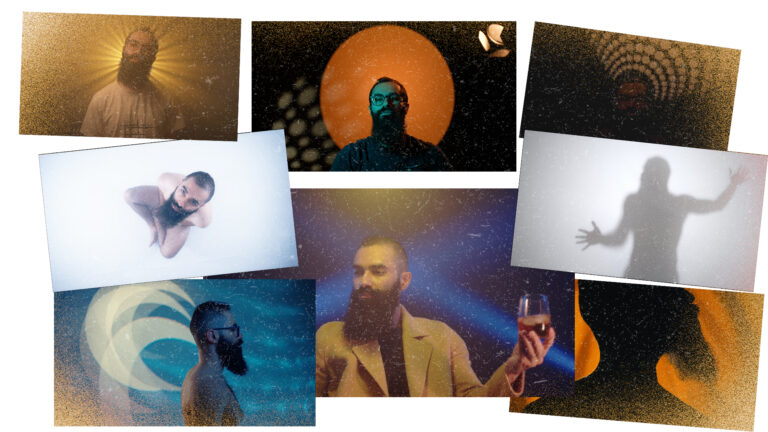
Happiness. Счастье. Երջանկություն. is a trilingual, experimental self-portrait staged as a ritual. One man fractures into three voices: English speaks as ego, bold and defiant; Russian confesses despair, intimate and raw; Armenian returns as memory, carried by family archives that refuse to fade.
At its core is an experiment in authorship. The protagonist is a fictional construction built entirely from the creator’s real life. He carries the maker’s past and present, his thoughts and face, and, most of all, his family. Staged performances sit beside unaltered home videos, fiction leaning against evidence. The character stands apart from the author, yet reveals him.
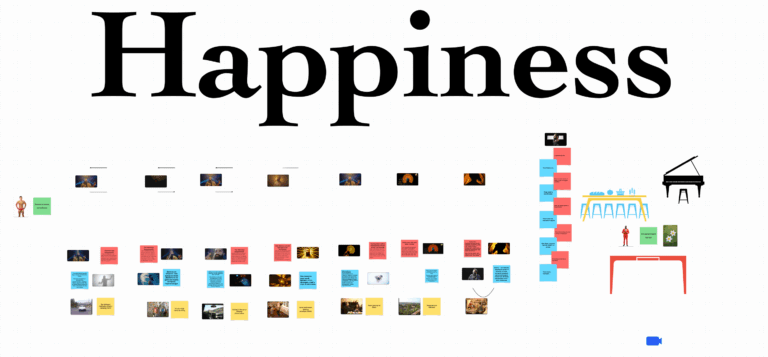
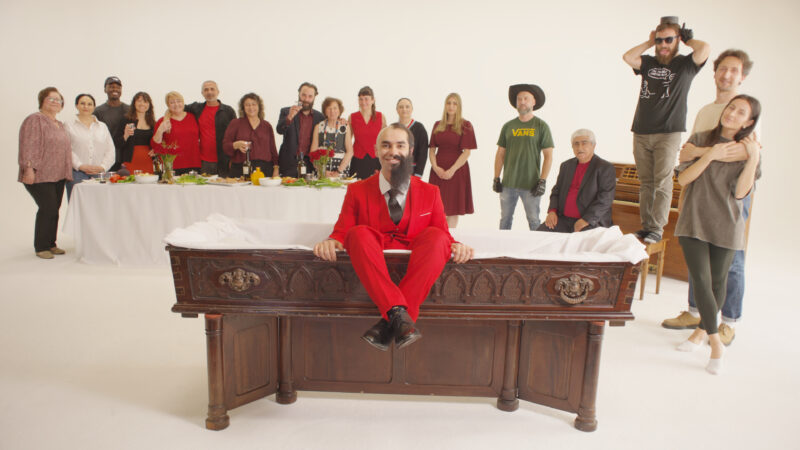
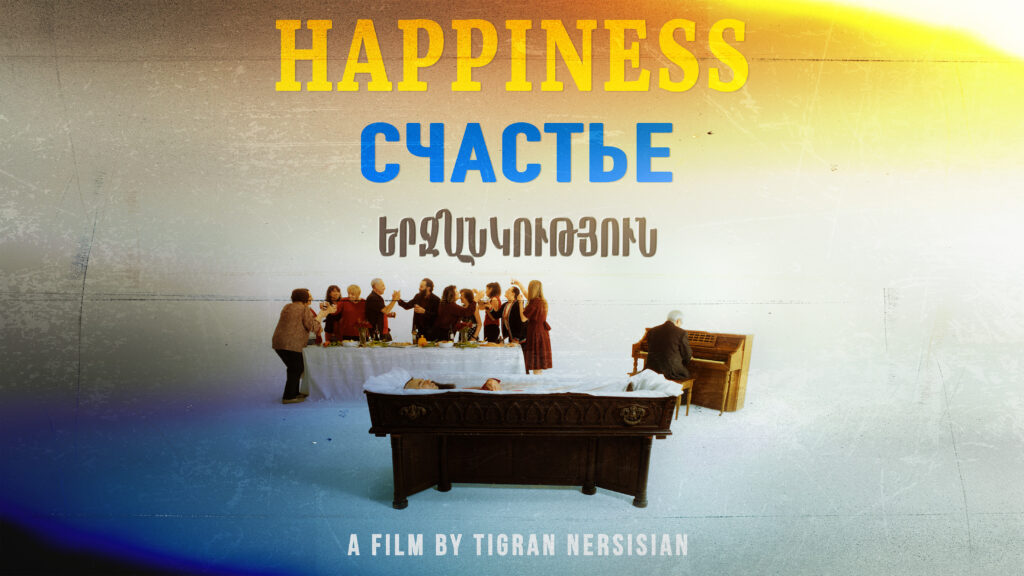
Moving between performance, interview, and home video, the film unfolds not as a plot but as a confrontation. The imagery circles two poles: a red-suited body in a coffin, and a living table where family gathers with music and food. Between those spaces, the voices collide, overlap, and consume one another, asking whether a life can face its ending without surrender, and who gets to set the terms.
Made at the threshold of thirty, this work is part confession, part requiem, part act of survival.
The Process
This wasn’t an ordinary film, so the process wasn’t either.
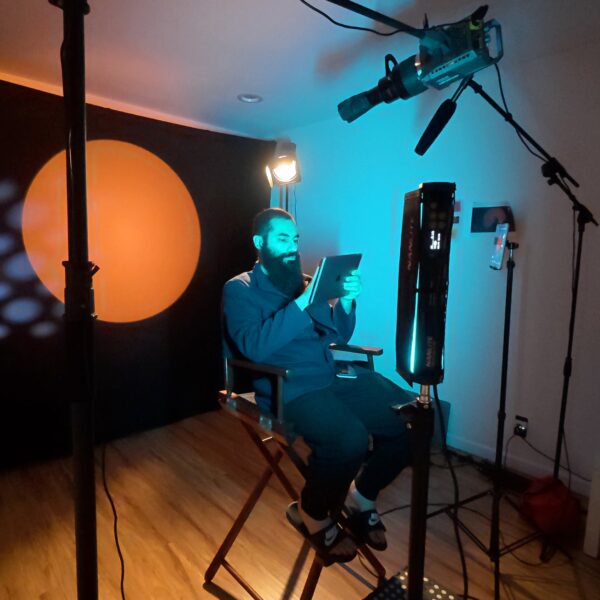
I started by writing the scenes first—building a bank of monologues, images, and actions without worrying about order. Only after that did I take a lighting class, which became the lab where I designed the visual “universe”. Those experiments gave the film its atmosphere and rules.
Structure
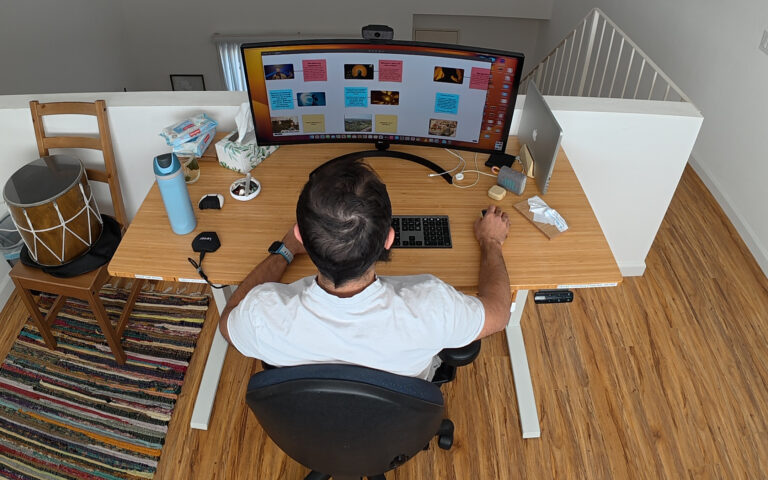
With the scenes written and the look defined, I moved to structure. I treated the edit like a three-line score: each “line” equals a language. I mapped when each line enters and exits, where two lines overlap, where all three separate, and where silence sits. I created handoff rules (how one line yields to another), designed transitions (light/sound cues instead of hard cuts), and built a timing grid so the lines could converse, interrupt, and counterpoint one another instead of stacking randomly.
Production
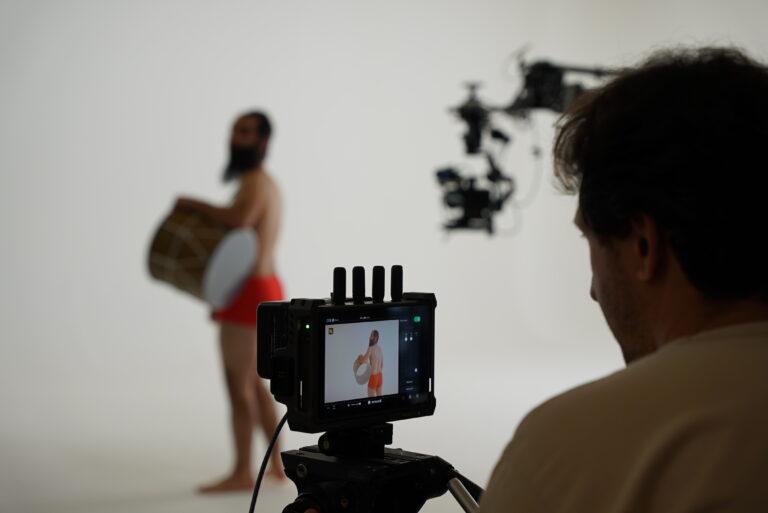
Production followed the logic of my body. I grew a long beard for this project, almost a year of preparation. With the beard intact, I shot the English ego material first over three months. Then I filmed the opening and ending with half my head and beard shaved. Finally, I completed the remaining scenes fully bald over another two months. In all, the shoot lasted six months.
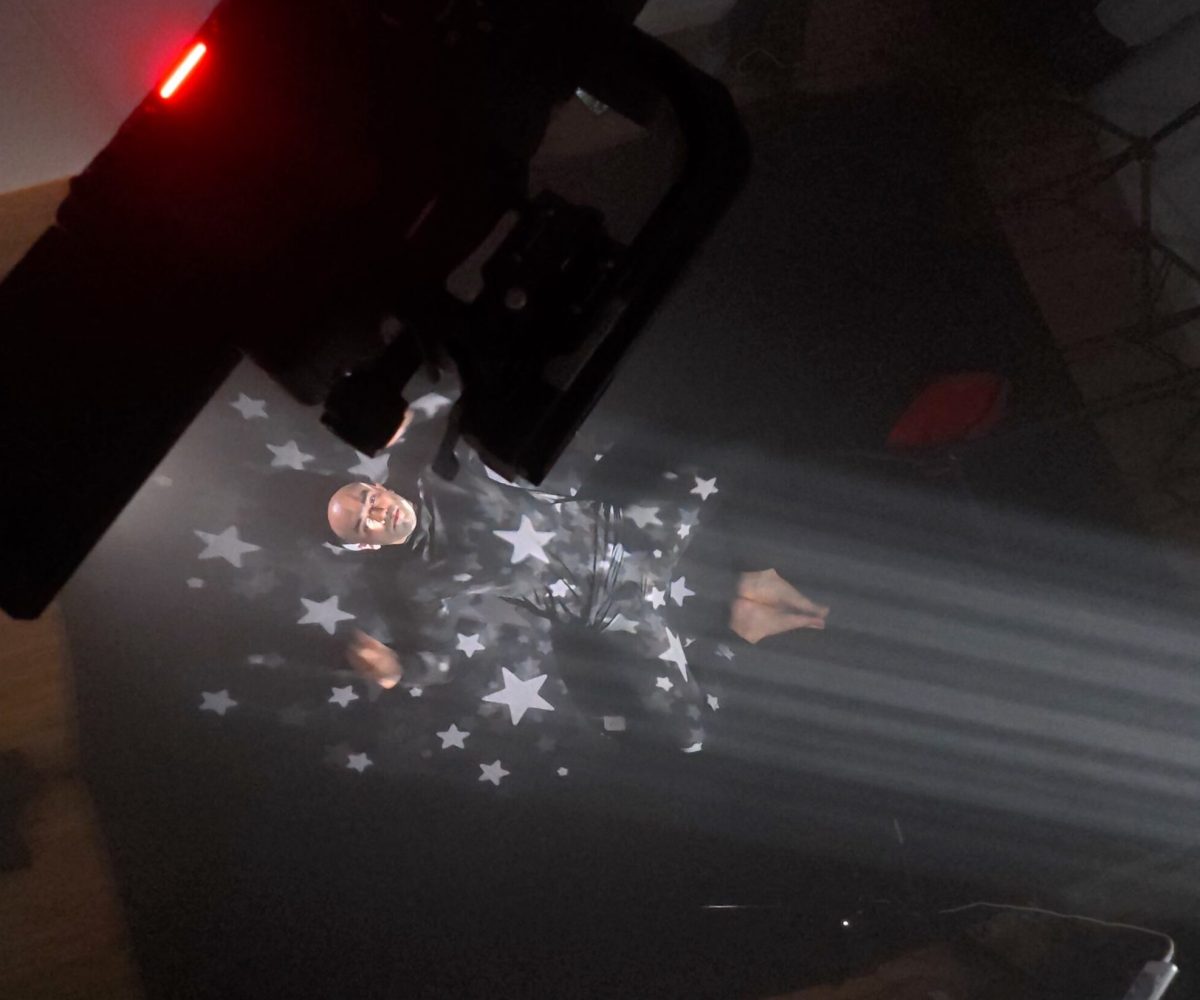
Everything except the beginning and end was filmed alone in my studio, in solitude. I built small sets, tested light and space, and found practical, improvised solutions to get the images I needed.
The first and Last Scenes
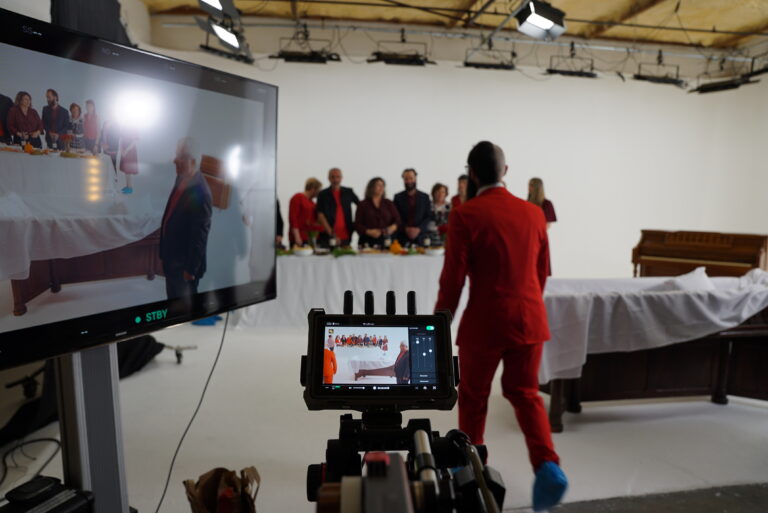
For the first and last scenes, I left my home studio and moved to a larger stage with a professional crew led by cinematographer David Asambadze. The people on screen are my actual family. My father played the piano live, and my wife and mom cooked Armenian dishes that perfumed the set. The day felt ceremonial, a meeting point of art and life, more ritual than shoot. It was a celebration of cinema, and one of the best set days of my life.
Friends and Family Premiere
The Night I Turned 30
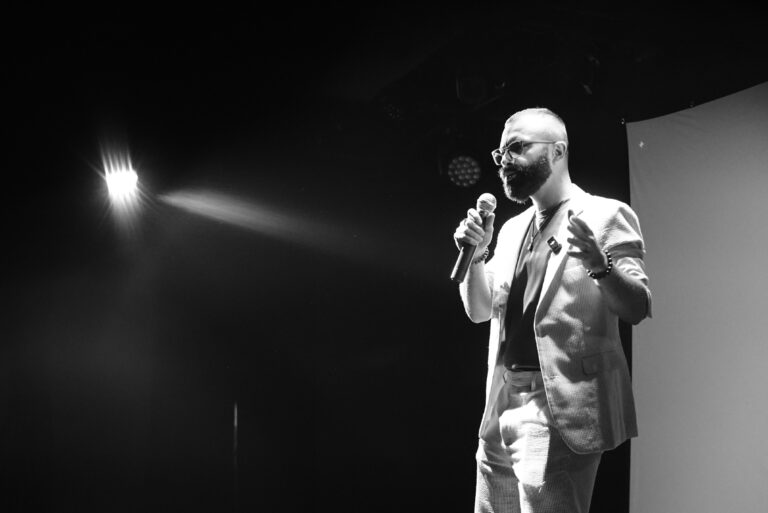
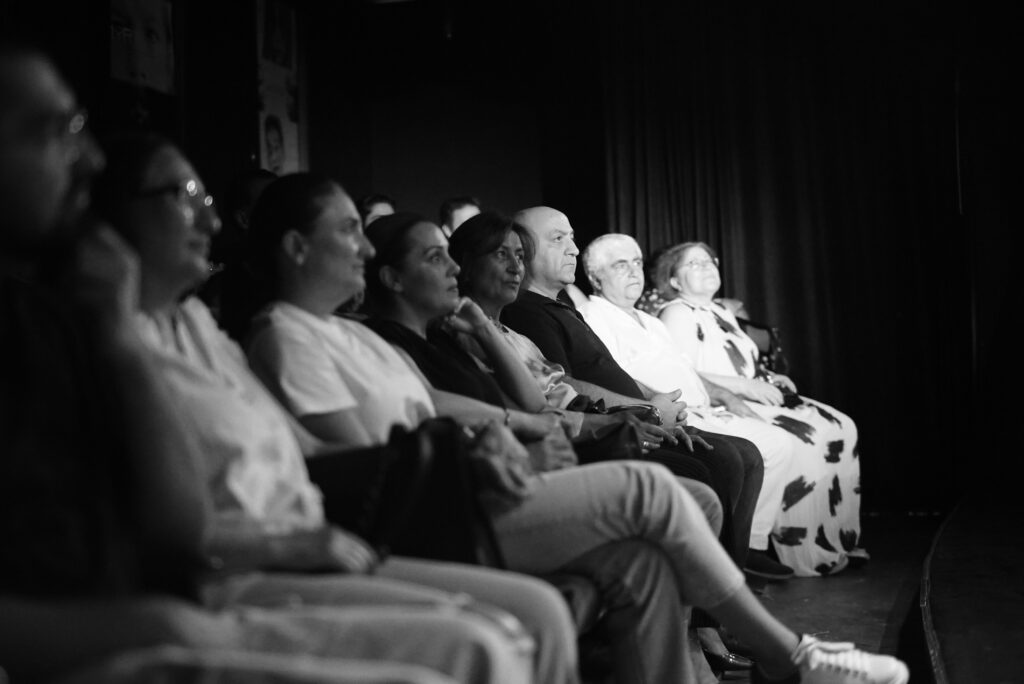
On August 30, 2025—my thirtieth birthday—I hosted a Friends & Family premiere for Happiness. Счастье. Երջանկություն. I rented a small theater and built the night I needed as an independent filmmaker: intimate, honest, ours. Before the screening I spoke for fifteen minutes, celebrating everyone who carried me here—friends, collaborators, my wife, and above all my parents. It felt less like an industry event and more like a homecoming: laughter, tears, long applause, the sense that the film finally exhaled in the room it was made for. It was surreal and unforgettable, a celebration of love, of cinema, and of the people I value most.
What's Next?
I'm not sure...
What’s next is simple. Most films are built with a target in mind: a market, a plan, a perfect audience. This one was built for a different reason. Happiness. Счастье. Երջանկություն. is an act of making, of speaking honestly, of trying a form we are not used to calling cinema. It mixes fiction with lived evidence and asks to be experienced more than positioned. The film will enter the festival circuit, and I will welcome any space that values exploration over strategy. I do not think work like this exists to prove; it exists to breathe, to witness, to find the few people who need it. If it reaches them, it has already done its job.